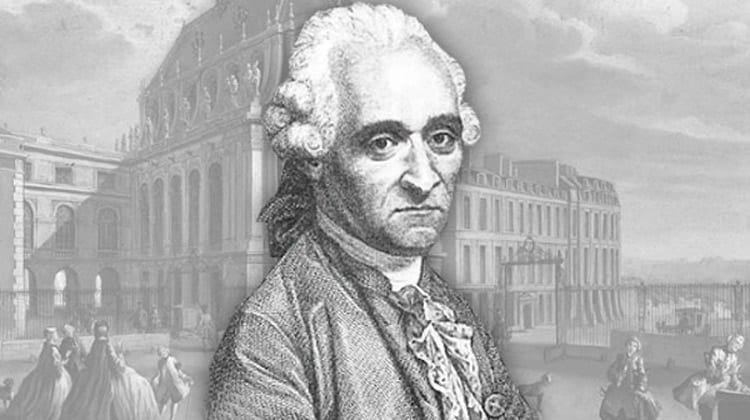
In the mysterious corridors of 18th-century mysticism, few figures shine as brightly as Court de Gébelin. His passionate quest to uncover ancient wisdom through symbols and secret knowledge has profoundly shaped the way we understand tarot today. Diving into the enigmatic world of Court de Gébelin and 18th-century mysticism feels like embarking on a magical journey, where history, spirituality, and curiosity intertwine. It’s a journey that invites us not only to explore the past but also to awaken the intuition within us.
Who Was Court de Gébelin?
Imagine a time when the Enlightenment’s rational glow was lighting the world, yet deep within, mysticism held onto its secret fires—that’s exactly where Court de Gébelin lived, breathed, and worked. Antoine Court de Gébelin was not just a scholar and freemason; he was a visionary who believed the tarot contained ancient, spiritual truths encoded within its imagery. He proposed that the tarot cards were no mere game but a powerful remnant of the Egyptian mysteries, holding keys to the universe’s hidden knowledge.
His ideas bridged the gap between the occult and the Age of Reason, making him a pivotal figure in tarot history and culture. Before Court de Gébelin, tarot was often dismissed as a mere curiosity or parlor amusement; after him, it became a respected symbol system worthy of mystical exploration. His groundbreaking work planted the seeds for tarot’s spiritual renaissance, which continues to flourish on platforms like tarotisto.com.
The Heart of 18th-Century Mysticism
To fully appreciate Court de Gébelin’s genius, we need to understand the mystic soil from which he grew. The 18th century was a fascinating age—a paradox of reason and mystery. While the Western world embraced science and logic, secret societies and esoteric scholars delved deeply into symbolism, alchemy, and the metaphysical. Mysticism wasn’t just about abstract ideas; it was a living, breathing movement that sought to connect humans with cosmic wisdom.
In this climate, tarot emerged as more than playing cards: it became a sacred mirror reflecting the soul’s journey. Court de Gébelin’s interpretation of tarot, influenced by his belief in universal harmony and ancient knowledge, showcased how tarot could act as a spiritual compass. This period’s mystical curiosity paved the way for tarot to blossom into a tool for personal insight and transformation, inviting everyone to explore their inner worlds.
Why Court de Gébelin Matters Today
At first glance, 18th-century mysticism and Court de Gébelin might feel like distant echoes from a dusty past. But their influence resonates powerfully in today’s spiritual landscape. His pioneering interpretation helped set the foundation for modern tarot reading, inspiring countless seekers to look beyond the surface and approach the cards as gateways to self-discovery.
Understanding the historical roots laid down by Court de Gébelin and 18th-century mysticism enriches your tarot practice, deepening your connection to the cards and their meanings. Knowing this background almost feels like receiving a secret handshake from history’s mystics, empowering you to embrace tarot not only as a divination tool but as a holistic spiritual practice.
Bringing It All Together
The story of Court de Gébelin and 18th-century mysticism is a beautiful reminder that tarot is more than a deck of cards—it’s a bridge between the ancient and the present, intuition and reason, mystery and clarity. When you hold the cards, you’re touching a lineage of curious minds and open hearts who sought to understand life’s deeper meaning.
Whether you’re a seasoned tarot reader or just beginning your spiritual journey, reflecting on the roots Court de Gébelin planted can inspire a renewed sense of wonder and respect for the cards. We invite you to dive deeper into the tarot’s rich history and culture on tarotisto.com, where every card tells a story connected to centuries of human wisdom.
FAQ
- Who was Court de Gébelin?
Antoine Court de Gébelin was an 18th-century scholar and mystic who believed tarot cards were ancient symbols containing deep spiritual truths, particularly connecting to Egyptian mystery traditions. - What is 18th-century mysticism?
It was a period where rational thought and spiritual exploration coexisted, with many scholars and secret societies studying esoteric knowledge, symbolism, and metaphysics alongside emerging scientific ideas. - How did Court de Gébelin influence tarot?
He was one of the first to propose that tarot was not just a card game but a repository of ancient wisdom, helping to elevate tarot’s status in spiritual and cultural circles. - Why should I care about Court de Gébelin’s work today?
Understanding his ideas enriches your tarot practice by connecting you to the cards’ deep historical and mystical roots, enhancing intuition and spiritual insight. - Where can I learn more about tarot history and mysticism?
Tarotisto.com offers a wealth of resources to explore tarot’s fascinating history, including the pivotal role of figures like Court de Gébelin in shaping tarot’s evolution.